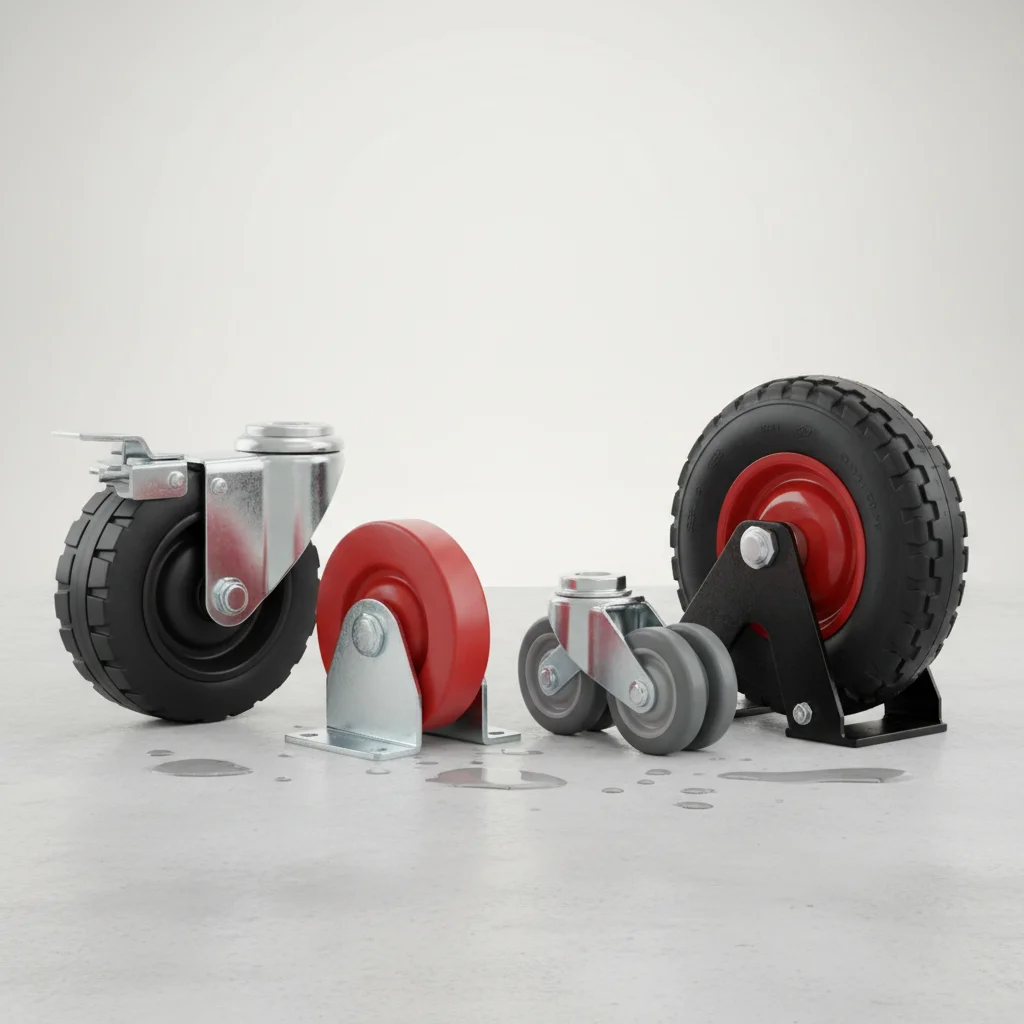
Choosing the right tool chest wheels is crucial for mobility and stability in your workshop. The best types of wheels for tool chests are typically made from materials like polyurethane, rubber, or cast iron, each offering distinct advantages in terms of load capacity, floor protection, and maneuverability. For most mechanics and workshop enthusiasts, polyurethane wheels strike an excellent balance between durability and floor-friendliness, making them a top recommendation.
Understanding Different Wheel Materials
The material of your tool chest wheels directly impacts their performance. Polyurethane wheels are highly popular due to their resistance to oils, greases, and chemicals, coupled with their ability to roll smoothly without marking floors. They offer a good balance of hardness and elasticity, making them suitable for various workshop surfaces. Rubber wheels, on the other hand, provide superior shock absorption and quiet operation, ideal for uneven floors or environments where noise reduction is a priority. However, they might have a lower load capacity compared to harder materials. Cast iron wheels are the most robust, designed for extremely heavy loads and rough surfaces, but they can be noisy and potentially damage delicate flooring.
Key Features to Consider for Optimal Mobility
Beyond material, several features contribute to the overall effectiveness of tool chest wheels. Swivel casters, which allow for 360-degree rotation, are essential for easy maneuverability in tight spaces. Locking mechanisms are equally important, providing stability and preventing the tool chest from rolling when stationary. Dual-locking casters, which lock both the wheel and the swivel, offer even greater security. The wheel diameter also plays a role; larger wheels generally roll more easily over obstacles and uneven surfaces, while smaller wheels offer a lower profile and can be more stable for stationary use.
- Polyurethane wheels for chemical resistance and floor protection.
- Rubber wheels for shock absorption and quiet operation.
- Cast iron wheels for maximum load capacity and rough terrain.
- Swivel casters for enhanced maneuverability.
- Dual-locking casters for superior stability and safety.
Load Capacity and Floor Type Considerations
|
Our Picks for the Best Tool Chest in 2026
As an Amazon Associate I earn from qualifying purchases.
|
||
| Num | Product | Action |
|---|---|---|
| 1 | Keter Stack-n-Roll Modular Tools Organizer for Garage Storage and DIY, 3 Piece Resin Rolling Tool Box System for Small Parts, Black |

|
| 2 | Goplus 5-Drawer Rolling Tool Chest, Tool Storage Box, Removable Tool Cabinet, Sliding Metal Organizer w/Lockable Drawers (Classic Black) |
|
| 3 | Goplus Rolling Tool Chest, 5-Drawer Tool Box Organizer w/Lockable Wheels & Sliding Drawers & Detachable Top & Adjustable Shelf, Tool Storage Cabinet for Garage Workshop (Blue) |
|
| 4 | Workington Portable Metal Tool Chest with 9 Drawers, 24" 9-Drawer Tool Chest Cabinet with Ball Bearing Drawer Slides, Steel Tool Storage Box Organizer 4006 Black |
|
| 5 | Goplus Rolling Tool Chest, 5-Drawer Tool Box Organizer w/Lockable Wheels & Sliding Drawers & Detachable Top & Adjustable Shelf, Tool Storage Cabinet for Garage Workshop(Gray) |
|
| 6 | Workington Portable Metal Tool Chest with 6 Drawers, 24" 6-Drawer Tool Chest Cabinet with Ball Bearing Drawer Slides, Steel Tool Storage Box Organizer 4005 Black |
|
| 7 | Workington Professional Industrial Portable Metal Tool Chest with 6 Drawers, 26" 6-Drawer Tool Chest Cabinet with Ball Bearing Drawer Slides, Steel Tool Storage Box Organizer 4015 Black |
|
| 8 | Road DAWG ATBT1204D-BLACK Torin Rolling Garage Workshop Tool Organizer: Detachable 4 Drawer Tool Chest with Large Storage Cabinet and Adjustable Shelf, Black |
|
| 9 | IRIS USA Screw Tool Organizer Small Parts Cabinet, 44-Drawer, Electronics Hardware Nuts and Bolts Plastic Storage Drawers Garage Storage, Stackable Bead Craft Organizer Building Bricks Sorter, Black |
|
| 10 | Goplus Rolling Tool Chest, 5-Drawer Tool Box Organizer w/Lockable Wheels & Sliding Drawers & Detachable Top & Adjustable Shelf, Tool Storage Cabinet for Garage Workshop (Red+Black) |
|
When selecting tool chest wheels, always consider the combined weight of your tool chest and its contents. Each wheel has a specific load rating, and it’s vital that the total capacity of all wheels exceeds the maximum anticipated weight. For instance, a tool chest weighing 500 pounds fully loaded would require four wheels each rated for at least 125 pounds, though a higher safety margin is always recommended. Additionally, the type of flooring in your workshop should influence your choice. Harder wheels like cast iron are suitable for concrete, while softer wheels like rubber or polyurethane are better for epoxy-coated floors or those prone to scratching.
Installation and Maintenance Tips
Proper installation of your tool chest wheels is critical for safety and performance. Ensure that all mounting bolts are securely tightened and that the wheels are aligned correctly. Regularly inspect your wheels for wear and tear, such as cracks, flat spots, or loose bearings. Lubricating the swivel bearings and axles periodically with a suitable grease can significantly extend the lifespan of your casters and maintain smooth operation. If a wheel becomes damaged, replace it promptly to prevent instability or potential accidents. Investing in high-quality replacement wheels can make a significant difference in the long-term usability of your tool chest.
Upgrading Your Tool Chest’s Mobility
Upgrading your tool chest’s wheels can dramatically improve its functionality and your workshop’s efficiency. Whether you’re replacing worn-out casters or enhancing a new purchase, selecting the right wheels based on material, features, load capacity, and floor type will ensure your tool chest moves smoothly and securely. Prioritizing durable, high-quality wheels will save you time and effort, making your workspace more adaptable and productive.
Get our weekly buyer guide
Practical specs, not advice. Unsubscribe anytime.
