For any technician, mechanic, or serious DIY enthusiast, a disorganized workspace can be a major productivity killer. The right tool chest and cabinet combo elevates your workshop’s efficiency by protecting tools and keeping them accessible. This guide details the best tool chest and cabinet combos for 2026, offering expert advice to help you select a system that perfectly matches your needs, space, and budget, ensuring your tools are organized and ready for use.
The Anatomy of a Tool Chest and Cabinet Combo
A tool chest and cabinet combo is a foundational element of an organized and efficient workspace. These systems typically consist of two or more interconnected units designed for comprehensive storage. The most common configuration includes a rolling base cabinet with substantial drawer space and mobility, topped with a smaller, often removable, tool chest. Some advanced combos integrate a sturdy workbench surface, creating a versatile workstation. This multi-component approach allows for better categorization of tools, separating frequently used hand tools from larger power tools and accessories, ultimately streamlining your workflow.
Decoding Tool Chest and Cabinet Types
The world of tool storage offers various configurations, each suited to different work styles and space constraints. Understanding these types is the first step in finding your ideal setup.
Portable Tool ChestsDesigned for mobility, portable tool chests are typically smaller, lightweight units that can be easily carried to various job sites or moved around a large workshop. They often feature multiple drawers for hand tools and small parts, secured by a central locking mechanism.
- Pros: Highly portable, compact, often more affordable.
- Cons: Limited storage capacity, less robust for heavy-duty tools.
- Ideal User: DIYers, electricians, or those who need to transport a select set of tools frequently.
Rolling Tool CabinetsThese are the workhorses of many workshops, characterized by their sturdy construction and integrated wheels (casters) that allow for easy movement. Rolling cabinets offer significant storage volume with numerous drawers of varying depths, capable of holding heavier tools and equipment.
- Pros: Excellent storage capacity, easy to reposition, durable.
- Cons: Can be large and heavy, potentially challenging on uneven surfaces.
- Ideal User: Mechanics, tradespeople, or anyone needing to move a large collection of tools around a garage or job site.
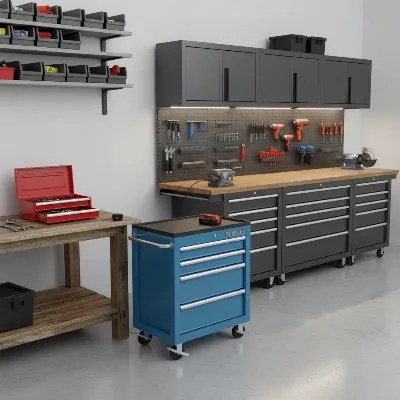 Different types of tool chests and cabinets displayed in a well-organized garage workshop, highlighting portable, rolling, and stationary options.
Stationary Workbench CombosFor those with a dedicated workspace, stationary workbench combos provide the ultimate in storage and functionality. These larger units often include a robust work surface, multiple drawers, and sometimes integrated pegboards or hutches, effectively combining storage with a productive work area.
- Pros: Maximum storage and workspace, highly stable, often include power features.
- Cons: Immobile, requires a permanent dedicated space.
- Ideal User: Professional mechanics, dedicated hobbyists, or anyone needing a fixed, comprehensive workstation.
Modular Tool Storage SystemsModern workshops are increasingly embracing modular systems, where individual toolboxes and organizers can be stacked, latched, and rolled together. Brands like DeWalt ToughSystem and Milwaukee Packout excel in this category, offering flexible, customizable solutions that can be expanded over time.
- Pros: Exceptional flexibility and scalability, inter-connectivity, customizable for specific needs.
- Cons: Initial investment can be higher, individual units might have less inherent weight capacity than a single large cabinet.
- Ideal User: Professionals who need to transport specific tool sets, or those with evolving storage requirements.
Key Factors for Choosing Your Perfect Tool Chest Combo
|
Our Picks for the Best Tool Chest in 2026
As an Amazon Associate I earn from qualifying purchases.
|
||
| Num | Product | Action |
|---|---|---|
| 1 | Workington Professional Industrial Portable Metal Tool Chest with 6 Drawers, 26" 6-Drawer Tool Chest Cabinet with Ball Bearing Drawer Slides, Steel Tool Storage Box Organizer 4015 Black |

|
| 2 | Goplus 5-Drawer Rolling Tool Chest, Tool Storage Box, Removable Tool Cabinet, Sliding Metal Organizer w/Lockable Drawers (Classic Black) |
|
| 3 | Goplus Rolling Tool Chest, 5-Drawer Tool Box Organizer w/Lockable Wheels & Sliding Drawers & Detachable Top & Adjustable Shelf, Tool Storage Cabinet for Garage Workshop (Red+Black) |
|
| 4 | Goplus Rolling Tool Chest, 5-Drawer Tool Box Organizer w/Lockable Wheels & Sliding Drawers & Detachable Top & Adjustable Shelf, Tool Storage Cabinet for Garage Workshop (Blue) |
|
| 5 | Keter Stack-n-Roll Modular Tools Organizer for Garage Storage and DIY, 3 Piece Resin Rolling Tool Box System for Small Parts, Black |
|
| 6 | Road DAWG ATBT1204D-BLACK Torin Rolling Garage Workshop Tool Organizer: Detachable 4 Drawer Tool Chest with Large Storage Cabinet and Adjustable Shelf, Black |
|
| 7 | Goplus Rolling Tool Chest, 5-Drawer Tool Box Organizer w/Lockable Wheels & Sliding Drawers & Detachable Top & Adjustable Shelf, Tool Storage Cabinet for Garage Workshop(Gray) |
|
| 8 | Workington Portable Metal Tool Chest with 9 Drawers, 24" 9-Drawer Tool Chest Cabinet with Ball Bearing Drawer Slides, Steel Tool Storage Box Organizer 4006 Black |
|
| 9 | IRIS USA Screw Tool Organizer Small Parts Cabinet, 44-Drawer, Electronics Hardware Nuts and Bolts Plastic Storage Drawers Garage Storage, Stackable Bead Craft Organizer Building Bricks Sorter, Black |
|
| 10 | Workington Portable Metal Tool Chest with 6 Drawers, 24" 6-Drawer Tool Chest Cabinet with Ball Bearing Drawer Slides, Steel Tool Storage Box Organizer 4005 Black |
|
Selecting the right tool chest and cabinet combo is a significant decision. Consider these crucial factors to ensure your investment serves you well for years to come.
Material and ConstructionThe durability and longevity of your tool chest largely depend on its build materials. Steel is the most common choice, renowned for its strength and resistance to impact. For professional-grade usage, look for cabinets constructed from 18-gauge steel or lower (lower gauge indicates thicker steel), often reinforced with welded construction. A powder-coated finish is essential for resisting rust, scratches, and everyday wear, keeping your unit looking new. Aluminum options offer a lighter weight profile while still maintaining good durability, making them suitable for portability without sacrificing too much strength. Plastic chests are the most budget-friendly and lightweight, ideal for light-duty use or hobbyists.
Drawer Quality and CapacityThis is often the most critical feature. High-quality tool chests utilize ball-bearing drawer slides that ensure smooth operation, even when heavily loaded. For professional use, aim for slides rated to handle at least 100 pounds per drawer; heavier-duty drawers might feature double slides to support 200 pounds or more. Features like soft-close slides prevent drawers from slamming shut, protecting your tools and reducing noise. Furthermore, drawers should come with liners (e.g., EVA foam) to prevent tools from sliding around and protect both the tools and the drawer’s finish. A variety of drawer depths is also beneficial, with shallow drawers for hand tools and deeper ones for power tools.
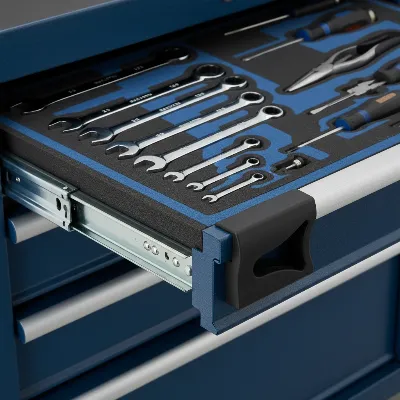 Close-up of a high-quality tool chest drawer, showing ball-bearing slides and foam liners.
Size and Storage CapacityBefore purchasing, assess your current tool collection and realistically anticipate your future needs. A good rule of thumb is to choose a system that can accommodate your existing tools with an additional 20-30% room for growth. Consider the physical dimensions of the combo in relation to your available floor space and ceiling height. A common mistake is buying a unit that’s too small, leading to quick overcrowding, or one that’s too large, impeding movement in your workspace.
Mobility and StabilityIf you require a mobile solution, invest in a rolling cabinet with robust heavy-duty casters. Look for at least two swivel casters for easy maneuverability and two locking casters to keep the unit securely in place when stationary. Sturdy handles, often tubular or integrated into the side, are crucial for comfortably pushing or pulling the cabinet. For stationary units, rubberized feet or leveling guides ensure stability on uneven floors.
Security FeaturesProtecting your valuable tools is paramount. Most quality tool chests come with an integrated locking mechanism, often a central cam lock system that secures all drawers simultaneously. For enhanced security, some premium models offer tubular or electronic locking systems. Always prioritize a system that provides peace of mind, especially if you store expensive or sensitive equipment.
Additional FeaturesModern tool chests go beyond basic storage. Look for convenient additions like built-in power strips with multiple 120-volt outlets and USB charging ports to power or charge your corded tools and electronic devices. Integrated pegboards, fold-out shelves, or slide-out work surfaces can further enhance functionality and customization, offering quick access to frequently used items or additional workspace.
Top Tool Chest and Cabinet Combos to Consider in 2026
The market for tool storage is competitive, with several brands consistently delivering high-quality, reliable products. Here are some of the top contenders for 2026, known for their durability, innovative features, and overall value.
- Milwaukee: A top-tier brand, Milwaukee offers excellent modular systems like the Packout, but also robust traditional steel storage. Their 56-inch High Capacity Rolling Tool Chest Combo is a standout, featuring 150-pound rated drawer slides, 18-gauge steel construction, and integrated power. Milwaukee focuses on durability and smart features for professional use.
- U.S. General (Harbor Freight): Surprisingly, this Harbor Freight brand has gained a reputation for offering professional-grade storage at a more accessible price point. The U.S. General Series 3 Roll Cabs (e.g., 42-inch or 30-inch Tech Cart) are highly praised for their solid build, smooth drawers, and extensive features often found in much more expensive units. They provide exceptional value for money.
- Husky (Home Depot): Husky consistently provides dependable and feature-rich tool storage. Their Husky 46-inch Mobile Workbench Tool Box with Hardwood Top is a popular choice, blending a durable rolling cabinet with a functional work surface. Reviewers often highlight its smooth drawers and magnetic closures.
- Craftsman (Lowe’s): A long-standing name in tools, Craftsman offers various series. The S2000 Series provides an affordable yet capable option for DIYers, while the V-Series targets more demanding professional use with thicker steel and higher capacity. Many Craftsman combos offer solid construction and a classic aesthetic.
- DeWalt: While known for power tools, DeWalt’s ToughSystem 2.0 offers a highly effective modular storage solution. Its interlocking boxes are IP65 rated for dust and water resistance, making them ideal for job sites. Although not traditional combos, these systems can be combined to create a comprehensive mobile storage setup.
- Icon Professional (Harbor Freight): Positioned as Harbor Freight’s premium line, Icon Professional roll cabs are designed to compete with high-end brands. They offer robust construction, integrated power bars with USB, and a lifetime warranty, making them a strong contender for professionals seeking quality without the top-tier price tag.
- Other Notables: Brands like Viper Tool Storage, Extreme Tools, and specialized units from JEGS (like their heavy-duty toolbox cart) also offer compelling options, often catering to specific professional needs with unique features and heavy-duty construction.
Masterful Organization and Maintenance for Your Tool Chest
Even the best tool chest combo won’t maximize your efficiency if it’s not organized and maintained properly.
Organizing Your Tools for Peak Efficiency
- Categorize and Sort: Start by emptying your entire tool chest. Group tools by function (e.g., wrenches, screwdrivers, pliers), then by type (e.g., metric vs. SAE wrenches), and finally by size.
- Logical Placement: Place frequently used tools in easily accessible drawers at the top or front. Heavier, less frequently used items like large power tools or impact sockets should reside in deeper, lower drawers to maintain stability and prevent tipping.
- Drawer Inserts and Dividers: Utilize foam inserts (often custom-cut “shadow boards”) to create dedicated spots for each tool, preventing them from shifting and making inventory quick. Alternatively, use drawer dividers, magnetic liners, or small bins for tiny items like fasteners, bits, and washers.
- Label Everything: Labeling drawers or bins allows for quick identification, saving precious minutes searching.
- Pegboards: If your combo includes a pegboard, hang your most-used hand tools within easy reach above your primary workspace.
> “A well-organized tool chest isn’t just about aesthetics; it’s about optimizing every second of your workday. Knowing exactly where each tool lives eliminates guesswork and significantly boosts productivity.” – Alex “Toolman” Tran, Master Technician
Maintaining Your Tool Chest for Longevity
- Regular Cleaning: Wipe down your tools and the interior of your drawers after each significant use to remove dirt, grease, and debris. Use a mild cleaning solution for stubborn grime and ensure everything is thoroughly dry to prevent rust.
- Lubricate Moving Parts: Apply a light, appropriate lubricant to drawer slides, hinges, and locks periodically to ensure smooth operation and prevent corrosion.
- Proper Storage Environment: Store your tool chest in a clean, dry environment, away from extreme temperatures and high humidity, which can accelerate rust and wear. Consider placing silica gel packs inside drawers to absorb excess moisture, especially in humid climates.
- Rust Prevention: For metal tools, apply a thin layer of rust-preventive oil (like WD-40 or specialty rust inhibitors) before storing them for extended periods.
- Inspect and Repair: Regularly inspect your tools for any signs of damage, such as cracks, loose handles, or dull cutting edges. Address these issues promptly by repairing or replacing components to maintain safety and efficiency.
- Avoid Overcrowding: Don’t cram too many tools into a single drawer. Overloading can damage drawer slides, deform the chest, and make it difficult to access tools.
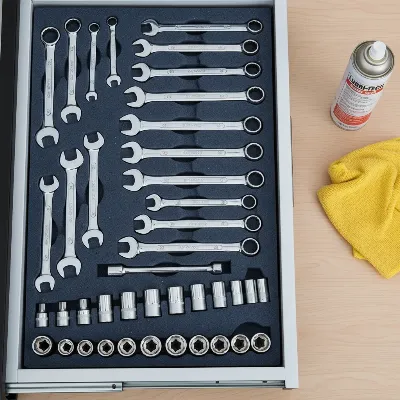 An open tool chest drawer with foam inserts and organized tools.
Conclusion
Investing in a high-quality tool chest and cabinet combo is one of the smartest decisions you can make for your workshop or garage. Beyond simply storing your tools, a well-chosen system enhances efficiency, protects your valuable equipment, and transforms a chaotic workspace into a streamlined, productive environment. By carefully considering the types available, prioritizing robust construction and thoughtful features, and committing to proper organization and maintenance, you can select a combo that not only meets your current demands but also grows with your needs for years to come.
What essential feature are you looking for in your next tool chest combo that would revolutionize your daily work?
Frequently Asked Questions
What is the ideal gauge of steel for a professional tool chest?
For professional use, an 18-gauge steel or lower (meaning thicker steel) is generally recommended. This gauge provides superior durability, strength, and resistance to dents and warping, ensuring the chest can withstand heavy use and protect valuable tools effectively.
Can I add wheels to a stationary tool cabinet?
While some stationary tool cabinets may offer pre-drilled holes or specific kits for adding casters, it’s crucial to check the manufacturer’s guidelines for compatibility. Attempting to add wheels to an incompatible or unreinforced stationary unit could compromise its stability and weight capacity.
How often should I lubricate my tool chest drawers?
The frequency of lubrication depends on usage, but a general recommendation is to lubricate ball-bearing drawer slides every 6 to 12 months. In high-dust or heavy-use environments, more frequent lubrication might be beneficial to maintain smooth operation and prevent wear.
What is the main difference between a tool chest and a tool cabinet?
A tool chest typically refers to a smaller, often portable unit with multiple drawers, designed to sit on top of a workbench or a rolling cabinet. A tool cabinet, on the other hand, is generally a larger, freestanding unit, often on wheels, providing substantial storage capacity and sometimes incorporating a work surface. Many modern systems combine both into a “combo.”
Get our weekly buyer guide
Practical specs, not advice. Unsubscribe anytime.

The guide was helpful in narrowing down my choices, especially regarding budget ranges. I picked up a mid-range combo, and while it’s decent for the price, some of the drawer liners feel a bit thin. It’s not a dealbreaker, but I might upgrade those myself down the line. Still, it’s way better than my old disorganized setup.
I finally pulled the trigger on one of the rolling base cabinet options mentioned, and it’s been a game-changer for my home garage. The mobility is fantastic, letting me bring my tools right to the project instead of constantly walking back and forth. The drawers are super smooth, and it feels really sturdy, like it’ll last for years.
As a professional mechanic, I can attest to how important an organized workspace is. This guide really hit the nail on the head with the emphasis on efficiency. My new tool chest and cabinet combo has made my daily routine so much smoother, protecting my tools and keeping everything right where I need it. No more hunting for that specific wrench!
I appreciated the breakdown of different configurations. I ended up going with a setup that had a removable top chest, which is perfect for when I need to take a smaller selection of tools to a friend’s place. My only minor gripe is that I wish there were more color options available, but the functionality is top-notch.