A rolling tool chest can tip over due to several factors, including a shifted center of gravity from opening multiple drawers, uneven weight distribution with heavy tools on top, unstable surfaces, worn components like casters, and overloading. Implementing DIY safety measures such as proper weight distribution, anchoring, and smart usage habits can significantly reduce the risk of accidents and ensure a safe, efficient workspace.
Understanding Why Tool Chests Tip
Before diving into solutions, it’s vital to recognize the primary reasons a rolling tool chest might become unstable and tip. Most incidents are preventable, stemming from a few common issues related to physics and usage.
Center of Gravity Shift
The most frequent culprit behind a tipping tool chest is the shifting of its center of gravity. When multiple drawers are opened simultaneously, especially those in the upper sections, the weight of the tools extends beyond the chest’s base, pushing the center of gravity forward. This creates a leverage point, making the entire unit prone to toppling forward. This is akin to a lever, where the weight of the extended drawers acts as the force, and the front edge of the chest acts as the fulcrum.
Uneven Weight Distribution
A tool chest becomes inherently top-heavy and unstable if heavier tools are stored in the upper drawers while lighter items reside below. The higher the concentration of weight, the higher the center of gravity, making the chest more susceptible to tipping when moved or when drawers are opened.
Unstable Surfaces and Movement
Rolling a heavily loaded tool chest across uneven floors, inclines, or over obstacles like cables and debris can significantly compromise its stability. A sudden jolt or an abrupt turn can easily cause the chest to sway, lose balance, and tip. Furthermore, failing to engage caster locks on a sloped or vibrating surface can allow the chest to roll unexpectedly, increasing the risk of an accident.
Worn Components
Over time, components like casters and drawer slides can wear out. Worn casters might not roll smoothly or consistently, leading to uneven movement. Damaged or loose drawer slides can cause drawers to sag or open unexpectedly, contributing to instability, especially if detents (mechanisms that hold drawers closed) fail.
Overloading
Every tool chest has a weight capacity. Exceeding this limit, either in total weight or by overloading individual drawers, puts undue stress on the structure and casters. An overloaded chest is heavier and more difficult to control, making it inherently more unstable and prone to tipping or structural failure.
Essential DIY Strategies to Enhance Stability
Ensuring your rolling tool chest remains stable involves a combination of mindful organization, simple modifications, and safe operating procedures. Many effective solutions can be implemented with basic DIY skills and materials.
Optimal Weight Distribution
|
Our Picks for the Best Tool Chest in 2026
As an Amazon Associate I earn from qualifying purchases.
|
||
| Num | Product | Action |
|---|---|---|
| 1 | Keter Stack-n-Roll Modular Tools Organizer for Garage Storage and DIY, 3 Piece Resin Rolling Tool Box System for Small Parts, Black |

|
| 2 | Goplus Rolling Tool Chest, 5-Drawer Tool Box Organizer w/Lockable Wheels & Sliding Drawers & Detachable Top & Adjustable Shelf, Tool Storage Cabinet for Garage Workshop(Gray) |
|
| 3 | Road DAWG ATBT1204D-BLACK Torin Rolling Garage Workshop Tool Organizer: Detachable 4 Drawer Tool Chest with Large Storage Cabinet and Adjustable Shelf, Black |
|
| 4 | IRIS USA Screw Tool Organizer Small Parts Cabinet, 44-Drawer, Electronics Hardware Nuts and Bolts Plastic Storage Drawers Garage Storage, Stackable Bead Craft Organizer Building Bricks Sorter, Black |
|
| 5 | Goplus Rolling Tool Chest, 5-Drawer Tool Box Organizer w/Lockable Wheels & Sliding Drawers & Detachable Top & Adjustable Shelf, Tool Storage Cabinet for Garage Workshop (Red+Black) |
|
| 6 | Workington Professional Industrial Portable Metal Tool Chest with 6 Drawers, 26" 6-Drawer Tool Chest Cabinet with Ball Bearing Drawer Slides, Steel Tool Storage Box Organizer 4015 Black |
|
| 7 | Goplus Rolling Tool Chest, 5-Drawer Tool Box Organizer w/Lockable Wheels & Sliding Drawers & Detachable Top & Adjustable Shelf, Tool Storage Cabinet for Garage Workshop (Blue) |
|
| 8 | Workington Portable Metal Tool Chest with 9 Drawers, 24" 9-Drawer Tool Chest Cabinet with Ball Bearing Drawer Slides, Steel Tool Storage Box Organizer 4006 Black |
|
| 9 | Goplus 5-Drawer Rolling Tool Chest, Tool Storage Box, Removable Tool Cabinet, Sliding Metal Organizer w/Lockable Drawers (Classic Black) |
|
| 10 | Workington Portable Metal Tool Chest with 6 Drawers, 24" 6-Drawer Tool Chest Cabinet with Ball Bearing Drawer Slides, Steel Tool Storage Box Organizer 4005 Black |
|
Proper weight distribution is fundamental to a tool chest’s stability. By strategically placing tools, you can significantly lower the center of gravity, making the unit much harder to tip.
- Heavy Tools on Bottom: This is the golden rule for tool chest organization. Store your heaviest items—such as power tools, large sockets, impact wrenches, and bulkier hand tools—in the lowest drawers of the chest. These drawers are typically designed to handle more weight and placing heavy items here anchors the entire unit.
- Lighter Tools on Top: Reserve the upper drawers for lighter, smaller, and frequently used tools like screwdrivers, smaller wrenches, pliers, and measuring tapes. This keeps the top section lighter, preventing it from becoming top-heavy.
- Avoid Overloading: Never pack a single drawer beyond its recommended weight capacity. Distribute tools evenly across multiple drawers rather than concentrating a heavy load in just one. This also helps prevent damage to drawer slides.
> “Proper weight distribution is your first line of defense against a tipping tool chest. Always think ‘heavy down, light up’ to keep your workspace safe.” – Admin of ReviewsVeryD.com, Tool Chest Specialist
Anchoring and Securing Your Tool Chest
For larger, stationary rolling tool chests, or those in high-traffic areas, anchoring it provides a robust layer of security. Even rolling chests can benefit from temporary or permanent anchoring.
- Wall Anchoring: This is highly recommended for larger tool chests, especially if children are present or the chest is frequently accessed.
- Direct to Studs: Locate wall studs using a stud finder. Drill pilot holes through the back of the tool chest (if suitable mounting points exist, or create your own) and secure it to the studs using heavy-duty lag screws or bolts. You might need to add wooden blocking (e.g., stacked 2x4s) between the wall and the chest if the stud locations don’t align with the chest’s back panel or if the chest’s back is recessed.
- Using Straps or D-Hooks: If drilling into the chest is not an option, you can use heavy-duty nylon straps or metal D-hooks. Attach D-hooks to wall studs and then use straps to secure the tool chest to these points. These can be easily released if the chest needs to be moved.
- Securing for Transport: If your rolling tool chest is transported in a vehicle (like a work van or truck), it must be firmly secured. Use tie-down straps to anchor it to the vehicle’s frame or dedicated anchor points. Unsecured chests can shift, cause damage, or even tip over during transit.
Smart Usage Habits
Daily habits play a significant role in preventing tipping accidents. Simple adjustments to how you interact with your tool chest can make a big difference.
- One Drawer at a Time Rule: This is paramount. Never open more than one drawer at once. Opening multiple drawers, especially in the upper sections, shifts the center of gravity dramatically forward, making the chest extremely unstable. Many industrial file cabinets incorporate interlocks for this reason, a design principle applicable to tool chests.
- Engage Caster Locks: Always lock the casters when the tool chest is stationary to prevent accidental movement. This is especially important on sloped floors or when working on uneven ground.
- Mindful Movement: When moving the chest, push it slowly and steadily, especially over uneven surfaces or thresholds. Avoid sudden jerks or turns, which can destabilize a heavy load. If possible, clear the path of any obstructions before moving the chest.
- Level Work Area: Ensure your tool chest is always on a stable, level surface. If your garage floor is uneven, consider using shims under the casters to level the chest when it’s stationary.
DIY Modifications for Added Security
Beyond basic habits and anchoring, a few DIY modifications can enhance your tool chest’s inherent stability.
- Adding Ballast Weight to the Base: For tool chests that are consistently prone to tipping, adding permanent weight to the very bottom can dramatically improve stability. Remove the bottom-most drawer and place heavy, flat materials like lead plates, steel bars, sandbags, or concrete pavers in the empty space beneath the bottom drawer. This lowers the overall center of gravity without taking up usable drawer space.
- Drawer Interlock Mechanisms (DIY Barrel Bolts/Latches): While commercial tool chests often lack interlocks, you can create a simple system to prevent drawers from opening unintentionally or simultaneously. Install barrel bolts or small slide latches on the sides of the drawers. A more advanced DIY approach could involve a single rod that slides down behind the drawer fronts, locking all but the current open drawer.
- Simple Barrel Bolts: Install one small barrel bolt on the side of each drawer. When you open a drawer, engage the bolt on the adjacent drawers to keep them secured. This requires manual action but can be very effective.
- Adjusting Lean (Shims under Front Casters): A subtle DIY trick is to place thin pieces of steel flat bar (1/16-1/8 inch thick) under the front casters. This gives the chest a slight backward lean, encouraging drawers to roll closed rather than slide open on their own, and shifts the center of gravity slightly backward, improving forward tipping resistance.
- Caster Maintenance and Upgrades: Regularly clean your casters to remove dirt and debris, which can hinder smooth rolling. Lubricate moving parts. If casters are worn out or damaged, replace them with higher-quality, more robust locking casters. Upgrading to larger, industrial-grade casters can also improve stability and mobility, especially on rougher surfaces.
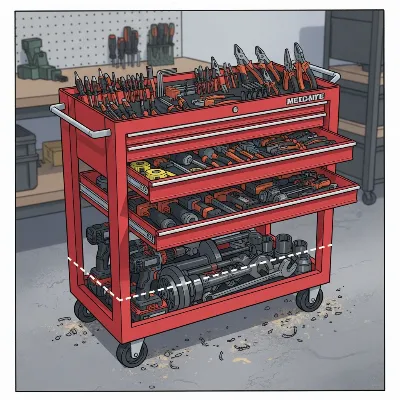 Optimizing tool chest stability by placing heavy tools in lower drawers and lighter tools in upper compartments.
Maintaining Your Tool Chest for Long-Term Safety
Consistent maintenance is key to prolonging the life of your tool chest and ensuring its ongoing safety.
- Regular Inspection: Periodically inspect your tool chest for any signs of wear, damage, or loose components. Check the casters for smooth operation, the drawer slides for proper function, and the overall frame for any bending or stress cracks.
- Cleaning and Lubrication: Keep drawer slides and caster swivel mechanisms clean and free of debris. Apply a silicone-based lubricant to drawer slides and a light oil to caster bearings regularly to ensure smooth operation and prevent sticking or jamming.
- Replacing Worn Parts: If you notice any damaged or excessively worn components, such as casters that no longer roll or swivel correctly, or drawer slides that are bent or broken, replace them promptly. Ignoring these issues can compromise the chest’s stability and functionality.
Conclusion
A rolling tool chest is an invaluable asset in any workspace, but its mobility inherently introduces a risk of tipping if not properly managed. By understanding the physics of stability and proactively implementing DIY safety measures, you can transform a potential hazard into a reliable storage solution. Prioritizing correct weight distribution, adopting safe usage habits like the “one drawer at a time” rule, and considering practical modifications such as anchoring or adding ballast weight will significantly reduce the risk of accidents. Regular maintenance of casters and drawer slides further ensures the long-term safety and functionality of your investment. Take these steps to secure your tool chest, protect your tools, and, most importantly, safeguard your well-being in the workshop.
What other DIY safety tips have you found effective in your own workshop?
Frequently Asked Questions
What causes a tool chest to tip?
Tool chests typically tip due to a shift in their center of gravity, often caused by opening multiple heavy drawers at once, uneven weight distribution (heavy items on top), or unstable ground. Overloading and worn casters can also contribute to instability.
Can I anchor a rolling tool chest to the wall?
Yes, anchoring a rolling tool chest to the wall is a highly recommended DIY safety measure, especially for larger units or in environments with children. You can secure it to wall studs using screws, bolts, or heavy-duty straps and D-hooks.
How do I properly load a tool chest?
To properly load a tool chest, always place your heaviest tools and items in the lowest drawers. Gradually put lighter tools in the upper drawers. This lowers the center of gravity, significantly improving the chest’s stability and making it less prone to tipping.
Are all tool chests prone to tipping?
Most rolling tool chests can be prone to tipping under certain conditions, primarily when their center of gravity shifts too far forward or they are on unstable ground. However, chests with wider bases, sturdier construction, and built-in anti-tip mechanisms are generally more stable than others.
What are drawer detents and why are they important?
Drawer detents are small mechanisms, often springs or friction catches, designed to hold drawers securely closed. They are important because they prevent drawers from accidentally rolling open, which can shift the center of gravity and cause a tool chest to tip over. Worn-out detents should be replaced.
Frequently Asked Questions
What causes a tool chest to tip over in a workshop?
Tool chests typically tip due to a shift in their center of gravity, often caused by opening multiple heavy drawers at once, uneven weight distribution (heavy items on top), or unstable ground. Overloading and worn casters can also contribute to instability, making the chest prone to tipping.
Is it possible to anchor a rolling tool chest to a wall?
Yes, anchoring a rolling tool chest to the wall is a highly recommended DIY safety measure, especially for larger units or in environments with children. You can secure it to wall studs using heavy-duty lag screws, bolts, or by utilizing straps and D-hooks for a robust connection.
What is the correct way to load tools into a chest for stability?
To properly load a tool chest, always place your heaviest tools and items, such as power tools or large sockets, in the lowest drawers. Gradually put lighter tools like screwdrivers and pliers in the upper drawers. This lowers the center of gravity, significantly improving the chest's stability and making it less prone to tipping.
Are all types of rolling tool chests equally prone to tipping?
Most rolling tool chests can be prone to tipping under certain conditions, primarily when their center of gravity shifts too far forward or they are on unstable ground. However, chests with wider bases, sturdier construction, and built-in anti-tip mechanisms are generally more stable than others, offering enhanced safety.
What are drawer detents and why are they important for tool chest safety?
Drawer detents are small mechanisms, often springs or friction catches, designed to hold drawers securely closed. They are important because they prevent drawers from accidentally rolling open, which can shift the center of gravity and cause a tool chest to tip over. Worn-out detents should be replaced promptly to maintain safety.
How to Stop a Rolling Tool Chest From Tipping Over
Prevent your rolling tool chest from tipping by following these essential DIY steps, focusing on weight distribution, anchoring, and smart usage habits.
Place your heaviest tools, such as power tools and large sockets, in the lowest drawers of the tool chest. Reserve the upper drawers for lighter, smaller, and frequently used items like screwdrivers. This lowers the center of gravity, making the chest significantly more stable.
For larger or stationary chests, anchor them to a wall by securing the back of the chest to wall studs using heavy-duty lag screws or bolts. Alternatively, use strong nylon straps or D-hooks attached to wall studs to secure the chest, especially if drilling into the chest is not an option.
Always open only one drawer at a time. Opening multiple drawers, particularly in the upper sections, dramatically shifts the center of gravity forward, making the chest extremely unstable and prone to tipping. This simple habit is crucial for safety.
Always lock the casters when the tool chest is stationary to prevent accidental movement, especially on sloped floors. Ensure the chest is on a stable, level surface; use shims under casters if your floor is uneven to maintain stability.
For chests consistently prone to tipping, add permanent weight to the very bottom. Remove the bottom-most drawer and place heavy, flat materials like lead plates, steel bars, or sandbags in the empty space beneath. This further lowers the overall center of gravity without sacrificing usable drawer space.
Get our weekly buyer guide
Practical specs, not advice. Unsubscribe anytime.

I’ve had a few close calls with my rolling tool chest, especially when I’m rummaging through multiple drawers at once. The tip about only opening one drawer at a time has been a game-changer. It seems obvious now, but I never really thought about how much the center of gravity shifts. My workspace feels a lot safer now, and I’m not constantly worried about it toppling over.
This was super helpful! I always put my heaviest tools in the top drawers, thinking it was more convenient. Realizing that uneven weight distribution is a major tipping factor made me completely reorganize. Now, the heaviest stuff is at the bottom, and it feels much more secure. Simple change, big difference.
Great tips! I always knew overloading was an issue, but the part about worn casters really hit home. I checked mine and they were definitely past their prime. Replaced them and the chest rolls so much smoother and feels way more stable. Wish I’d known this sooner, would have saved me some headaches.
The advice on anchoring is solid, but I found it a bit difficult to implement in my small garage. My chest is always on the move, so permanent anchoring isn’t really an option. I’ve tried to redistribute weight better, which helps, but I’m still looking for a more flexible solution for keeping it stable on uneven surfaces.