A new steel tool chest is more than just a storage unit; it’s an investment in your efficiency, organization, and the longevity of your valuable tools. From the moment it rolls into your workspace, understanding the commitment to proper maintenance is crucial. Neglecting its care can lead to rust, stiff drawers, and a diminished lifespan, undermining its utility and appearance. This comprehensive guide will equip you with the knowledge and practical tips needed to ensure your steel tool chest not only endures the rigors of your work but continues to perform flawlessly for years to come. By implementing these maintenance routines, you’ll protect your investment and maintain a highly functional, professional workspace.
The Foundation of Durability: Understanding Your Steel Tool Chest
Steel tool chests are renowned for their strength and resilience, making them a preferred choice for professionals and enthusiasts alike. Their robust construction provides unparalleled protection for your tools against impact, dust, and general workshop hazards. However, even the most durable steel is susceptible to environmental factors like moisture and dust, which can lead to corrosion and operational issues over time. Recognizing these vulnerabilities is the first step in formulating an effective maintenance strategy that capitalizes on steel’s inherent strengths while mitigating its weaknesses.
Initial Setup and Preparation for Long-Term Performance
Before you even fill your new steel tool chest with tools, a few crucial steps can lay the groundwork for its long, productive life. Proper placement is paramount; always position your tool chest in a cool, dry area, ideally off bare concrete floors, which can wick moisture and accelerate rust. Using anti-rust liners or rubber mats in your drawers not only cushions your tools but also provides an extra barrier against moisture and helps with air circulation. A quick initial wipe-down with a mild cleaner will remove any manufacturing residues, ensuring a clean start for both the chest and its contents. For see our reviews recommendations on this site.
Regular Cleaning: Your First Line of Defense Against Wear
Consistent cleaning is the cornerstone of steel tool chest maintenance, preventing the accumulation of dirt, grime, and metal shavings that can cause damage and impede functionality.
Daily Wipes and Quick Clean-ups
After each workday, take a few minutes to perform a quick clean-up. Wipe down the exterior and interior surfaces of your chest with a clean, soft cloth or microfiber towel to remove dust, oil, and fingerprints. For minor spills or stubborn smudges, a solution of mild dish soap and warm water is usually sufficient. It’s important to immediately clean up any spilled liquids to prevent potential rust. Always avoid harsh acids, strong alkalis, corrosive solvents, or abrasive materials like steel wool, as these can damage the chest’s protective coating and finish.
Deep Cleaning Protocol
|
Our Picks for the Best Tool Chest in 2026
As an Amazon Associate I earn from qualifying purchases.
|
||
| Num | Product | Action |
|---|---|---|
| 1 | Road DAWG ATBT1204D-BLACK Torin Rolling Garage Workshop Tool Organizer: Detachable 4 Drawer Tool Chest with Large Storage Cabinet and Adjustable Shelf, Black |

|
| 2 | Goplus Rolling Tool Chest, 5-Drawer Tool Box Organizer w/Lockable Wheels & Sliding Drawers & Detachable Top & Adjustable Shelf, Tool Storage Cabinet for Garage Workshop (Blue) |
|
| 3 | Workington Professional Industrial Portable Metal Tool Chest with 6 Drawers, 26" 6-Drawer Tool Chest Cabinet with Ball Bearing Drawer Slides, Steel Tool Storage Box Organizer 4015 Black |
|
| 4 | Goplus 5-Drawer Rolling Tool Chest, Tool Storage Box, Removable Tool Cabinet, Sliding Metal Organizer w/Lockable Drawers (Classic Black) |
|
| 5 | Workington Portable Metal Tool Chest with 9 Drawers, 24" 9-Drawer Tool Chest Cabinet with Ball Bearing Drawer Slides, Steel Tool Storage Box Organizer 4006 Black |
|
| 6 | IRIS USA Screw Tool Organizer Small Parts Cabinet, 44-Drawer, Electronics Hardware Nuts and Bolts Plastic Storage Drawers Garage Storage, Stackable Bead Craft Organizer Building Bricks Sorter, Black |
|
| 7 | Workington Portable Metal Tool Chest with 6 Drawers, 24" 6-Drawer Tool Chest Cabinet with Ball Bearing Drawer Slides, Steel Tool Storage Box Organizer 4005 Black |
|
| 8 | Goplus Rolling Tool Chest, 5-Drawer Tool Box Organizer w/Lockable Wheels & Sliding Drawers & Detachable Top & Adjustable Shelf, Tool Storage Cabinet for Garage Workshop (Red+Black) |
|
| 9 | Goplus Rolling Tool Chest, 5-Drawer Tool Box Organizer w/Lockable Wheels & Sliding Drawers & Detachable Top & Adjustable Shelf, Tool Storage Cabinet for Garage Workshop(Gray) |
|
| 10 | Keter Stack-n-Roll Modular Tools Organizer for Garage Storage and DIY, 3 Piece Resin Rolling Tool Box System for Small Parts, Black |
|
Periodically, a more thorough deep clean is necessary to address hidden grime. Begin by emptying all drawers and shelves, removing all tools and items. Use a vacuum cleaner with a small attachment to effectively remove loose dirt, dust, and especially metal shavings from the bottom and corners of the drawers. Next, wash the interior and exterior of the tool chest with a diluted solution of mild detergent and warm water, using a soft cloth or scrub brush. After washing, rinse all surfaces thoroughly with clean water and, most critically, dry the chest completely with a towel or microfiber cloth to prevent water spots and rust. For persistent grime or rust spots, a paste of baking soda and water or a mixture of vinegar and water can be effective, followed by scrubbing with a soft brush and then rinsing and drying.
Keeping Things Smooth: Lubricating Drawer Slides and Moving Parts
Smooth-operating drawers are essential for an efficient workflow and are a hallmark of a well-maintained tool chest. Proper lubrication of the drawer slides is key to preventing wear and ensuring effortless access to your tools.
Why Lubrication Matters
Over time, friction from frequent use can cause drawer slides to stiffen, making them harder to open and close. Lubrication reduces this friction, extending the lifespan of the slides and the overall functionality of your tool chest. It also helps prevent wear and tear on the ball bearings within the slides, maintaining their smooth, quiet operation.
Choosing the Right Lubricant
For metal drawer slides, white lithium grease is widely recommended due to its staying power and ability to withstand varying temperatures without running. Another effective option is paraffin wax, often sold as “door-ease” or “gulf wax,” which can be applied as a solid stick. Some professionals also use dry lubricant sprays, which leave a light, non-greasy film. It is generally advisable to avoid greases containing molybdenum sulfide or graphite for standard drawer slides, as these can sometimes attract more dust and grime or be unsuitable for certain metal components.
Application Techniques
Before applying any lubricant, it’s crucial to clean the drawer slides thoroughly. Separate the drawer members if possible and wipe down each component with a dry cloth to remove any accumulated dirt and old grease. You can use a water-based spray cleaner like WD-40 or a mild degreaser to loosen stubborn debris. Once clean and dry, apply a thin, even film of your chosen lubricant to the raceways and contact points of the slides. After application, open and close the drawers several times to ensure the lubricant is evenly distributed across the entire mechanism, then wipe away any excess.
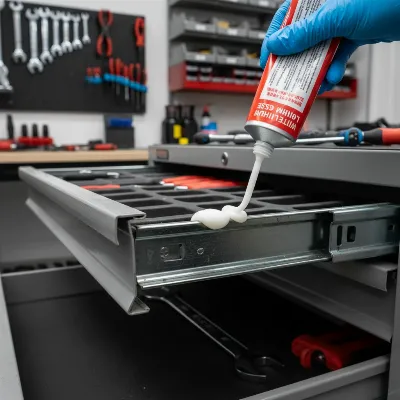 Maintenance technician lubricating steel tool chest drawer slides with white lithium grease for smooth operation
Battling the Elements: Rust Prevention and Treatment
Rust is the primary enemy of any steel tool chest. Taking proactive measures and knowing how to treat it early can significantly prolong your chest’s life.
Proactive Rust Prevention Strategies
Controlling moisture is paramount. Consider placing silica gel packets or other moisture absorbers inside drawers to manage humidity, especially in damp environments like garages. A small dehumidifier in the workspace can also be highly effective. Applying a protective coating to the exterior steel every few months can create an additional barrier against moisture and air. Options include automotive wax, rust prevention sprays, clear coat sealants, or a light application of machine oil. Regularly inspect your tool chest for any scratches or chips in the paint or finish. These small imperfections expose the bare steel to the elements, creating prime spots for rust to begin. Address these promptly by lightly sanding away any surface rust, cleaning the area, and then applying a rust-resistant primer and paint to seal the metal.
> “The secret to a rust-free steel tool chest lies in consistent vigilance. Treat it like a valued vehicle – regular cleaning, a protective coat, and immediate attention to minor damage are non-negotiable.” – Alex “Toolman” Chen, Veteran Workshop Technician
Tackling Existing Rust
If rust does appear, early intervention is key. For mild surface rust, a paste made from baking soda and water or a mixture of white vinegar can be applied, left to sit for a short period, and then scrubbed off with a soft brush. For tougher spots, a commercial rust remover can be used, following the product’s instructions carefully. After removing rust, always clean the area thoroughly, dry it completely, and then apply a protective coating to prevent its return. For stubborn rust, a fine-grit steel wool might be used with extreme caution, as it can scratch the finish, so it’s best to test on an inconspicuous area first.
Comprehensive Care: Beyond the Basics
Maintaining your tool chest goes beyond just cleaning and rust prevention; it involves paying attention to all its components to ensure full functionality.
Caster and Wheel Maintenance
If your tool chest is mobile, the casters and wheels require attention. Regularly clean any debris, such as metal shavings, dust, or hair, that might accumulate around the wheels, as this can impede their movement. Lubricate the swivel points and axles with a light machine oil or silicone spray to ensure smooth rolling and turning. Periodically check that all caster fasteners are tight, and replace any worn-out wheels promptly to maintain stability and ease of movement. Remember to engage the wheel locks when the chest is stationary to prevent accidental rolling.
Lock and Latch Care
The locks and latches on your tool chest are vital for security and keeping drawers closed during movement. Apply a small amount of graphite lubricant or a light machine oil to the keyhole and latch mechanisms periodically. Work the key or mechanism a few times to distribute the lubricant. This will prevent seizing and ensure smooth operation. Check that all latches engage securely and adjust them if they become loose to prevent drawers from opening unintentionally.
Organizing for Optimal Preservation
Good organization contributes significantly to your tool chest’s longevity. Using drawer liners not only protects the drawer bottom but also prevents tools from shifting and scratching the steel surface. Avoid overloading drawers beyond their specified weight capacity, as this can warp slides and damage the chest structure. Always ensure tools are clean and dry before storing them, as residual moisture on tools can transfer to the chest and initiate rust. Furthermore, avoid pulling all drawers out at the same time on mobile units, as this can cause the chest to become top-heavy and tip forward, posing a safety risk.
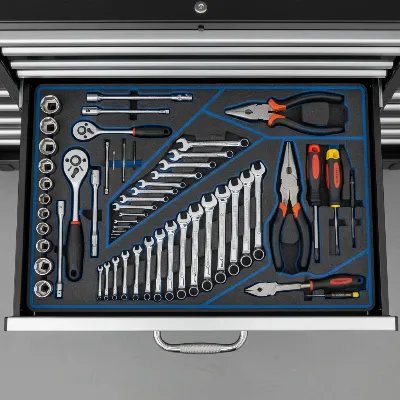 Organized steel tool chest interior with drawer liners and neatly arranged tools
Expert Insights for Enhanced Longevity
“Many people overlook the importance of environmental control,” shares Alex “Toolman” Chen. “A climate-controlled workshop is ideal, but even simple steps like using moisture absorbers and ventilating the chest occasionally can make a monumental difference in preventing rust and preserving your steel investment.” He emphasizes that acknowledging environmental factors, especially humidity, is as important as the cleaning schedule itself.
Conclusion
Maintaining your new steel tool chest isn’t a chore; it’s an investment that pays dividends in tool protection, workspace efficiency, and lasting durability. From regular cleaning and meticulous lubrication to proactive rust prevention and thoughtful organization, each step contributes to preserving your chest’s optimal condition. By dedicating a small amount of time to these essential practices, you ensure your steel tool chest remains a reliable, high-performing centerpiece of your workshop for decades to come. What one maintenance tip has made the biggest difference for your tool storage?
Frequently Asked Questions
How often should I clean my steel tool chest?
Daily spot cleaning is recommended, with a deep clean of the interior and exterior every few months or as needed based on usage and environmental conditions. Consistent cleaning prevents grime buildup and rust.
What is the best lubricant for tool chest drawer slides?
White lithium grease is widely recommended for metal drawer slides due to its durability and non-running properties. Paraffin wax or a dry lubricant spray can also be effective alternatives for smooth operation.
How can I prevent rust inside my tool chest drawers?
To prevent rust, ensure tools are always clean and dry before storage. Use anti-rust drawer liners, place silica gel packets to absorb moisture, and avoid storing the chest in overly humid environments.
Can I use household cleaners on my steel tool chest?
Mild dish soap mixed with warm water is generally safe for cleaning steel tool chests. However, avoid harsh chemicals, abrasive cleaners, or steel wool, which can damage the finish and accelerate corrosion.
What should I do if I find a scratch on my tool chest?
Address scratches promptly to prevent rust. Clean the area, lightly sand any surface rust, and apply a rust-resistant primer followed by touch-up paint that matches your tool chest’s finish to seal the exposed metal.
Get our weekly buyer guide
Practical specs, not advice. Unsubscribe anytime.
